Thomas plays Poulenc

Sheffield Telegraph 19 September 2018

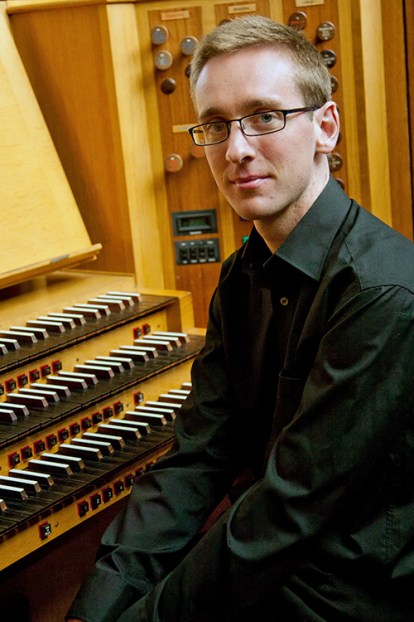
Sheffield Bach Choir is thrilled that Thomas Corns, Director of Music at Sheffield Cathedral, will play at their ‘French Connection’ concert on 6 October. “I’m very much looking forward to playing Poulenc’s Concerto” said Thomas. “It’s the first time I’ve performed with one of Sheffield’s major ensembles as a soloist since my appointment – and it’ll be in the Cathedral where I work!”

thomas corns 1Prize-winning graduate of the Royal Academy of Music, Thomas held organ scholarships at Cambridge and St Paul’s Cathedral and has performed on TV and radio. Thomas feels privileged to be nurturing the centuries-old tradition of choral singing in this wonderful venue. “I enjoy working with the talented boys and girls who come from across the city to be choristers, and with the professional musicians and students of the choir.”

The choristers will join the Bach Choir to sing Duruflé’s Requiem, Faure’s well-known Cantique and Poulenc’s exquisite Salve Regina, with mezzo soprano Joanna Gamble and baritone Thomas Asher. Singing with the altos will be Thomas’ wife Claire, who joined the choir shortly after their arrival in 2017.

As a child Thomas was inspired by the organ playing at Wells cathedral where he was a chorister. “Good organs often have a tremendous expressive range but they are also impressive instruments” he explained. “Playing a cathedral organ to thousands of people on an important occasion can feel like a big responsibility – but it’s also great fun!”

Staying with the organ theme, two days later the choir’s music director Simon Lindley presents a free recital at Nether Green Methodist Church on the magnificent Father Willis organ, which was almost certainly played at his grandparents’ wedding in 1916.  “Henry ‘Father’ Willis built organs in St Paul’s cathedral, the Royal Albert Hall and Windsor Castle, as well as the somewhat smaller but no less fine example now at Nether Green” said Simon. “My grandmother Elsie May lived on Gladstone Road, Ranmoor, but moved to Leeds after her marriage to Rev Francis Joshua Lindley”. Music and ministry run in the family; Simon’s sister Ruth was a singing tutor who sang in the London Oratory Choir, his late father was a minister and his cousin Lisa lives in Sheffield and sings with Sheffield Bach Choir.

The recital is organised by the choir with Sheffield & District Organists’ and Choirmasters’ Association, of which Simon is President-Elect, in commemoration of the Armistice Centenary, which the choir will also mark by presenting Karl Jenkins’ Armed Man at the cathedral on 17 November. “This recital includes works by Elgar, Butterworth and Vaughan Williams” explained Chris Walker, Chair of Sheffield Bach Choir. “It will be a wonderful evening rounded off by a free buffet. We hope readers will come to hear Simon play the organ that has such a special place in his family history – especially since it’s his 70th birthday two days later!”

The recital is free, with a retiring collection for choir funds; details from www.sheffieldbachchoir.org.uk.

Tickets for the cathedral concert from www.sheffieldbachchoir.org.uk, www.wegottickets.com, Sheffield Cathedral shop, or at the door.

Sheffielder’s family link to choir concert composer

JULIA ARMSTRONG Published: 17:10 Friday 01 June 2018

John Barnard, a keen mountain climber and skier living in Stannington, who is also researching his family history, is looking forward to hearing a rarely-performed Requiem composed by his grandma’s great-grandfather, to be sung this June by Sheffield Bach Choir.

John, who was brought up in London but came to Sheffield 40 years ago, was a researcher at the university before starting a scientific software business with a colleague whose wife sings with the choir, writes Anne Adams.

image“I’m very much looking forward to hearing the Bach Choir’s performance,” said John “I have only heard one previous performance, given by the Bristol Chamber Choir, which my ancestor Robert Pearsall helped to found”.

Pearsall (1795-1856) was brought up in Bristol but lived and died in a mediaeval Swiss castle he bought and restored while pursuing his musical interests. His son Robert was a cavalry officer and fencing master who drowned in mysterious circumstances in a London canal. One of his daughters eloped aged 16, her husband later unexpectedly becoming Earl of Harrington; his other daughter painted a portrait of her father which hangs in the National Portrait Gallery.

Pearsall composed his Requiem to commemorate the Abbots of the St Gallen monastery in Switzerland, but sadly a civil war intervened and Pearsall never heard his work performed. The manuscript was largely forgotten until 2005 when it was finally published by the Church Music Society.

Sheffield Bach Choir will sing the Requiem on Saturday, June 9 as part of their commemoration of the 1918 Armistice, and in support of the annual Broomhill Festival. “We are pleased and proud to present this expressive and beautiful Requiem by one of the greatest English musicologists of his day.’ said the choir’s music director Dr Simon Lindley. “His setting of the mediaeval carol, In dulci jubilo, remains very popular, and is frequently included in the Festival of Nine Lessons and Carols from King’s College Cambridge”.

Baritone Quentin Brown from Leeds will sing a group of George Butterworth’s songs to texts from Housman’s famous A Shropshire Lad, as well as a number of popular ballads including Yorkshire-born composer Haydn Wood’s Roses of Picardy. Wood famously related that the melody came to him as he was going home on a London bus one night, and he jumped off the bus and wrote down the refrain on an old envelope while standing under a street lamp.

Also on the programme at St Mark’s Church.are Parry’s Songs of Farewell and Blest Pair of Sirens, Vaughan Williams’ Te Deum and Bairstow’s Lord, Thou hast been our refuge. The choir will be accompanied by organist David Houlder on the St Mark’s Organ, now magnificently restored by Wood of Huddersfield.

Tickets cost £12 (£10 concessions), available from http://www.sheffieldbachchoir.org.uk or at the door on the night. John will be rushing back to secure his seat after chairing a meeting of his ski-mountaineering club in Hathersage. As for Pearsall’s castle – it’s now the Schloss Hotel Wartensee, a hotel and gourmet restaurant in Rorschacherberg, Switzerland.

Read more at: https://www.sheffieldtelegraph.co.uk/news/sheffielder-s-family-link-to-choir-concert-composer-1-9190127

Rising stars move mountains to sing Bach in hometown Sheffield

Sheffield Telegraph 5 April 2018

Booking musicians with growing national reputations is difficult; getting them a second time following a postponement is well-nigh impossible – but not when they are committed to singing in their hometown!

Rising stars Anna Harvey and Ella Taylor from Sheffield have moved mountains to sing Bach’s St Matthew Passion at the cathedral on Saturday 14 April, following a snow-enforced postponement of the original concert.

Both live in London but despite busy schedules are adamant about meeting their commitment to sing Bach’s masterpiece. Sheffield Bach Choir faced a herculean task in bringing together soloists, choristers and orchestra for the re-scheduled concert. ‘The Passion obviously has to be performed within the Easter period’ said Music Director Dr. Simon Lindley, ‘ It is a delight, as well as something of a relief, that Anna and Ella, along with tenor Stephen Liley and bass Thomas Hunt in the roles of Evangelist and Christ, all happen to be free for the rearranged date. We are very pleased to have secured Quentin Brown to make up our team of soloists’.

Hailed as ‘simply wonderful’ by the New York Times, mezzo-Soprano Anna Harvey was a pupil at Broomhill, Lydgate and Tapton schools, and graduated in Music from Cambridge University. The holder of a number of prestigious awards, Anna recently sang in Mozart’s Requiem on a national tour that included Sheffield City Hall, and is thrilled to be back: ‘Having grown up in Sheffield, I am very excited to be returning to my home city to sing this wonderful and monumental work by my favourite composer, Bach’.  Anna, who sings with the Welsh National Opera and enjoys a busy concert schedule, counts performing at the 2016 Last Night of the Proms at the Royal Albert Hall as a particular highlight.

Ella, whose earliest musical memory is being ‘part of a string group called ‘Fiddle Fingers, where I first picked up a violin!’, cut her teeth as a chorister at the cathedral, winning BBC Chorister of the Year in 2010. She went on to graduate in Music from the University of Sheffield and is currently studying for a Masters in Performance at the Royal Academy of Music. ‘My passion lies in performing new/contemporary works’ says Ella, ‘I have been lucky to premiere several pieces by up-and-coming composers, as well as works by Schönberg and George Benjamin, among others’.

The Bach choir will be joined by members of St Peter’s Singers from Leeds in the celebrated choruses for double choir, while the acclaimed young Choristers of St John’s Ranmoor will provide the thrilling chorus of upper voices required by Bach in the first half. The audience is encouraged to sing the chorale hymns as would have happened in Bach’s day.

However, you’ll need to set out early – it starts at 6.30pm and there is always competition for prime spots in the cathedral’s grand acoustic. Tickets for the original concert are valid, those without tickets can get them from http://www.sheffieldbachchoir.org.uk/

Link to the article in the Sheffield Telegraph

The Magic of Elijah

THE MAGIC OF MENDELSSOHN – AND HIS 1846 MASTERPIECE


First heard at the 1846 Birmingham Festival, Elijah was alleged to have been accorded at its first hearing the greatest reception in all musical history. The enthusiastic manner of those present at what was, clearly, a glorious premiere in the sumptuous surroundings of Birmingham Town Hall is the stuff of legend.

Mendelssohn was, of course, the first musical polymath. His activities encompassed so much and ticked so many boxes – executant (viola, violin, piano, organ to name but four capacities), “music director”/concert organiser”, speaker, public figure and, perhaps pre-eminently, his profound and seemingly ceaseless creative spirit as a composer – an art he developed prodigiously and very rapidly from a very young age.

It is truly remarkable that, at a time when most contemporary youngsters are tackling their GCSE exams, Mendelssohn had already composed one of the most perfect pieces of chamber music ever written – the Octet for strings. During the years when many adults are still in further education he had under his belt two Overtures that remain today corner-stones of the orchestral repertoire: that to Shakespeare’s A Midsummer Night’s Dream and a concert overture entitled The Hebrides [perhaps better know as Fingal’s Cave] as well as his very first book of eight sets of Songs without Words.

 His kindly, warm demeanour made him many friends – that is certain. But the number of commitments he undertook – many of them ensuing from such personal contacts and friendships – had a truly detrimental effect on his health and strength and he was dead from a stroke well before he was forty years of age.


JUST WHAT IS IT THAT MAKES ELIJAH SO VERY SPECIAL?
Perhaps mostly because it was such a pioneering work – a prototype in the experience of choral and orchestral music. It was its composer’s second oratorio as such – the first being St Paul of exactly ten years previous, for the Lower Rhine Festival of 1836. There are far fewer smash hit numbers in Elijah than in St Paul – though the sustained level of the drama in the later work makes one increasingly regretful that Mendelssohn never wrote an opera.  Another of Mendelssohn’s works that feels like an oratorio, the Hymn of Praise [Lobgesang] is actually a cantata, and the concluding part of its composer’s second symphony.

In the first part of Elijah, the momentum of the “trial” elements between Jehovah and Baal carries all before it whilst the dialogue between Ahab and Elijah involving the chorus – Thou art Elijah, thou he that troubleth Israel – is similarly spectacular and in stark contrast to the warm benevolence of the scene between the prophet and the widow, through which the son of the grief-stricken mother is brought back to life.

Besides the inherent scriptural narrative, which the composer maintains with persuasion and authority, there are a number of significant influences from earlier music: the hushed Chorale Cast thy burden upon the Lord, the undulating Jewish chant heard in Lord, bown Thine ear to our prayer and, particularly, the Handelian use of choral recitative. At the end of the opening chorus beginning at the words: The deeps afford no water and the rivers are exhausted…the composer is at his most persuasive with all factors combining to yield a powerful response from both performer and listener.

Handel had used a choral recitative to similar effect in Israel in Egypt a hundred years earlier in the chorus He sent a thick darkness o’er all the land….a thick darkness….. even darkness which might be felt.

 Throughout the work, and most especially in the first half, there are a number of what might best be referred to as “motto” themes – especially in the orchestration. The sonorous and portentous opening chords heralding the opening recitative announcing God’s drought to the people recur later as to the haunting descending intervals with the starkness of the use of a falling diminished fifth. These techniques are later used in his operas by Wagner and, of course, most notably of all in the very first English oratorio to establish an international reputation, namely Elgar’s The Dream of Gerontius, like Elijah premiered at the Birmingham Festival. Elgar’s Prelude or overture to The Dream is reflective and motif-led with elements of procession, reflection, even miniature arias but its elements pervade the whole work.

Mendelssohn’s Overture is much more conventional, though no less powerful. In particular, the startling use of rests in the main subject is stirred up at the climax to provide a gloriously exultant, yet suitably imploring, lead to the words of the opening Chorus – Help, Lord, wilt Thou quite destroy us.

 There are a number of instances in the chorus writing where massive homophonic, chorale-like utterances take over the texture – as in But yet the Lord seeth not [at For He, the Lord our God, He is jealous God] and, most notably The Lord is God, O Israel hear during The fire descends from heaven.

 In Part One, the continuous sequence of choruses [unknown before in music] known as the Baal Choruses is truly immense in its intensity, and at times almost, frenzied utterance. There is nothing in all music like it prior to Wagner.

 The successor to Elijah, his heir, the young Elisha, is depicted by a treble voice during the course of a lengthy final movement at the end of the first half of the work when the young man is instructed to respond to the prophet’s questions – has my prayer been heard by the Lord. Negative answers follow until finally a cloud of rain appears along with an accompanying storm wonderfully depicted in the chorus of victory Thanks be to God, he laveth the thirsty land…..the waters gather, they rush along…the stormy billows are high, their fury is mighty and, most original of all the setting of the layered texts at the words but the Lord is above them and almighty – this must have sounded amazingly modern to the ears of the early Victorian audiences.

Gradually, in Part Two, the mood of the people is incited to move against Elijah: Woe to him they sing at the tops of their voices: Let the guilty prophet perish…He shall die. A semi-chorus of angels sings the opening stanza of Psalm 121 – Lift thine eyes and a balm-like chorus, He watching over Israel, provides some of the most exquisite minutes in the work. The climax of the story and the paradox of divinity are wonderfully conjoined and we discover in the strongly-wrought chorus Behold! God the Lord passed by that the appearance of the deity is not through, or by means of earthquake, fire or storm but in the still, small voice after which follows a massive double Chorus – Holy, holy, holy. Other real highlights of the second half of the work are the simple, choral-like He that shall endure to the end and the prophet’s dramatic ascent to heaven – like a whirlwind – in Then did Elijah the Prophet break forth like a fire. Ultimately, a consoling final quartet is followed by a resonant chorus of praise set to a text devised from Psalm 8 – Lord, our Creator, how excellent Thy Name is in all the nations…Amen sings the Choir at full force on the final page.

Rising stars come out for Mozart

Two leading ladies up and coming in the world of professional music take centre stage at Sheffield Bach Choir’s concert of music by Bach and Mozart on Saturday 7 November at Sheffield Cathedral.

HelenBywater
Helen Bywater

Clarinettist HELEN BYWATER is the soloists in Mozart’s evergreen clarinet concerto with the National Festival Orchestra under the direction of Bach Choir conductor Dr Simon Lindley. Dr Lindley says: “it’s a real delight to be able to include a concerto within a choral programme and all of us who admire Helen’s special gifts are delighted to be able to welcome Helen to this Autumn’s main concert.”

Ella Taylor, soprano

Another leading young musician (who hails from Sheffield and cut her musical teeth as a cathedral chorister – her father, Neil, is Cathedral Director of Music) is ELLA TAYLOR, soprano who leads the solo vocal quartet in the Mozart’s autumnal Requiem Mass with its dark colouring reflecting both the mood of the centuries old texts reflecting on mortality and perhaps the mood of the composer himself, for he was writing the piece on his death-bed…..
Ella studies music at the University of Sheffield and singing at the Royal Academy of Music with Elizabeth Ritchie. She created a major impact, if not a sensation, as soloist in the Bach Choir’s critically acclaimed Messiah performance last December.

This concert is the fourth presentation in the Bach Choir’s 65th season. Unlike many of “pensionable” age, the enthusiastic members of SHEFFIELD BACH CHOIR have no thoughts of the prospect of carpet slipper existence by a home fireside!

Far from it – additional to the BACH AND MOZART GALA in November, their 65th season comprises a complete account of Handel’s Messiah at Sheffield Cathedral on Monday 7 December with Bach’s St John Passion at the same venue in March.

The Bright Seraphim burns for Simon Lindley in the Bach Choir’s 65th season.

In the 65th year of its foundation, Sheffield Bach Choir, widely regarded as one of the finest such groups in Britain, present Handel’s Samson at St Mark’s, Broomhill on Saturday 17 October 2015 at 7.30.

Samson is one of Handel’s most dramatic and powerful works. Nearest in date of composition to his masterpiece, Messiah, the pages of Samson burn with the same degree of committed fervour with regard to his setting of the selected vocal texts.

The piece has everything – love, intrigue, betrayal, murder and internecine strife between Philistines and Israelites. Ultimately, of course, the Lord Jehovah emerges triumphant against a whole host of pagan deities, including Dagon and Samson concludes with the show-stopping Let the bright Seraphim in burning row and its succeeding final chorus Let their celestial concerts all unite (the soprano equivalent of Messiah’s The trumpet shall sound).

Other magical moments include much music for the eponymous hero including the moving Total eclipse in which he bemoans his loss of sight. Dalila’s betrayal includes coquettish, yet treacherous, treatments of some of the most memorable texts.

The bass soloist includes roles as Harapha – a giant of Gath – and the more tender material for Manoah, father of Samson.

The alto takes the role of the prophet Micah with memorable melodies of great beauty in abundant profusion.

The performance by Sheffield Bach Choir includes the omission of a few, but not many, numbers to bring the duration within reasonable length.

The National Festival Orchestra is led by Nicholas Meredith, with acclaimed  solo trumpeter Jamie O’Brien. The continuo accompaniments, on harpsichord as well as chamber organ, are in the hands of Alan Horsey. Principal soloists are Kristina James, Kathryn Woodruff, Christopher Trenholme in the title role and bass Quentin Brown along with Helen Strange, a gifted young singer, in the significant role of the Israelitish Woman. The Bach Choir’s Music Director, Dr Simon Lindley, conducts – forty five years on from the first time he directed the piece, in St Albans Cathedral.

Unlike many of “pensionable” age, the enthusiastic members of the Bach Choir have no thoughts of the prospect of carpet slipper existence by a home fireside! Far from it – their 65th season comprises a complete account of Handel’s Messiah at Sheffield Cathedral on Monday 7 December and Bach’s St John Passion at the same venue in March.

Celebrating the American way on June 21st at St Mark’s Church Broomhill

Truly can Sheffield Bach Choir’s upcoming Summer Concert be said to live up to the title Summer Time – An American Celebration! (writes Simon Lindley..)

Although, alone among the three composers – Donald Hunt, Morten Lauridsen and John Rutter – only Morten Lauridsen is American born and bred, the repertoire for the whole gala evening has been either devised for, or specifically involving, American musical celebrations of one kind or another.

Often heard in Worcester concerts or at the Worcester Three Choirs’ Festival over the years, Dr Donald Hunt’s American Serenade explores the rich diversity of repertoire from the tradition of the American “musical” and is a celebration of the art of George Gershwin, Jerome Kern and Cole Porter – with individual numbers for smash hit shows such as High Society, Porgy and Bess, Show Boat, Sally, Very warm for May and Girl Crazy. Dr Hunt has orchestrated his American Serenade especially for this particular concert to match the instrumental provision of the rest of the programme, and Sheffield Bach Choir is profoundly grateful to him for this extremely generous undertaking.

The first performance of English composer Dr John Rutter’s Requiem took place in October 1985 at Lovers’ Lane United Methodist Church, Dallas in Texas and the same composer’s Feel the Spirit was first heard in New York’s Carnegie Hall in June of 2001. On each occasion, the music was under the directorship of the composer himself. English mezzo-soprano Melanie Marshall was the soloist at the first hearing of Feel the Spirit.

The traditions of the American “musical” and the sacred “spiritual” are wonderfully served and celebrated by Dr Hunt and Dr Rutter and this is immediately, and memorably apparent from the very first bar of each piece.

American composer Morten Lauridsen’s setting of the Christmas Respond O magnum mysterium comes from the traditional Latin liturgy of the Feast of the Nativity, being part of the service of the First Matins of Christmas. This deeply expressive motet was commissioned by Marshal Rutter in honour of his wife, Terry Knowles, and first heard sung by Los Angeles Master Chorale under Paul Salamunovich in Los Angeles’ Dorothy Sanders Pavilion on 18 December 1994.

John Rutter’s Requiem – an intensely personal work dedicated to the memory of the composer’s father – is a work more in the traditions of Fauré and Duruflé rather than those of Berlioz and Verdi. Rutter, like Walford Davies and Herbert Howells before him, sets a mixture of vernacular texts in English (mostly from the magical prose of the Book of Common Prayer Office for the Burial of the Dead and the Psalms of David) alongside more ancient Latin stanzas from the traditional Missa pro defunctis of the Roman rite. The easy companionship of these two separate inspirations is a highlight of Rutter’s profound and expressive setting. Rutter’s music incorporates an earlier anthem, The Lord is my Shepherd – a movement enhanced by a magical oboe obbligato, and an item composed almost a decade previously, in 1976.

Messiah Memories

by Simon Lindley

It remains one of life’s profound mysteries that Messiah is widely regarded as the sacred work to perform during, or even slightly before, Advent in preparation for Christmas. But that is how things are!

A comparatively small amount of the work is concerned with the Nativity, though there’s prophetic material a-plenty at the outset and a huge corpus of music dealing with the consequences of the birth – ministry, suffering, death, Resurrection and the famous “last things” with which the Book of Revelation is so strongly concerned.

Many will have a huge stock of memories of the work – of performances that have been memorable (hopefully for the right sort of reason), of occasions that have proved a triumph over the adversity and that could involve anything from the sudden indisposition of a soloist to something as mundane as a power cut. Maybe the interpretative nuance provided by a particular solo singer, or group of soloists, was such that the memory of a very special event remains with us still, years and years later.

Messiah is high in what the marketing boys and girls refer to as “the tingle factor” and that facet plays a significant part in the powerful effect of the piece as a whole and each of the three parts in particular.

There are extra-mural aspects of the piece, too. Chief among these is the special connection with charity resulting from the work being devised specifically for the benefit and relief of prisoners in the Dublin Gaols. Subsequently, in its composer’s lifetime, London performances were often a means of raising much-needed funds for one of Handel’s favourite charitable endeavours – the Foundling Hospital – whose important work with children and families is continued to this day by the Coram Foundation in Bloomsbury. Both Handel and his contemporary William Hogarth were indefatigable supporters of the Foundling Hospital and both served long periods as governors of the institution. Sheffield Bach Choir is proud to have played its part in arranging present-day retiring collections in aid of local social endeavour, specifically the Archer Project at the Cathedral over the past few years. At the conclusion of this year’s music-making, there will be a retiring collection for a project associated with the Victoria Hall.

It is the pathos and sense of rhetoric communicated through the music that is significant in terms of the masterly verbal selection secured by Charles Jennens, the Leicestershire squire who devised the libretto. Though there are quotations a-plenty from the 1611 King James Bible, it is the influence of the Book of Common Prayer issued half a century later, in 1662, that is even more powerful. The texts drawn from the Burial Service and the Easter Anthems in the work’s third part never fail to move listener and performer alike and, beside the evocative Old Testament texts there are the movements drawn from the great treasury of the Psalms of David – the extraordinarily declamatory Let all the angels of God and The Lord gave the word are prime examples of such vivid treatments.

Much is made by musical historians of the speed at which Handel completed the piece, and yet it’s worth remembering that a great amount of the musical score consists of only two instrumental parts and a single vocal line – some of the best-known movements fall into this category: O thou that tellest good tidings to Zion, Rejoice greatly, How beautiful are the feet, If God be for us and, of course, the glorious I know that my Redeemer liveth. Even the most complex numbers only comprise ten musical lines in all.

Legendary Bach Choir conductor, Dr Roger Bullivant MBE, was invariably wont to use as the basis for his edition of Messiah the instrumental material from the Bourne Original Edition issued in the early years of the last century. Investigation by Bach Choir member Jen Smith has been helpful in locating background information on this trail-blazing musicologist whose work on Handel’s masterpiece pre-dated the great Dr Watkins Shaw’s by some six decades. It is hoped to be able to give a full account of T W Bourne and his great work in some future programme and perhaps on the Bach Society’s Website.

Major factors in the scoring are concerned with the oboe parts and the harmonised contributions of the so-called continuo material devised by the stylish harpsichordist or organist in accordance with a numerical system of musical short-hand printed beneath the cello and double bass line known as “figured bass” by which means the composer indicates the harmonies to be played above this bassus generalis.

It was perhaps inevitable under the circumstances that Handel would, to some degree, find the need to re-utilise material originally devised for another purpose. He drew upon a double concerto for orchestra and horns to provide the basis of the magnificent chorus Lift up your heads. Anyone wishing to investigate the origin of some others of the best-loved of the choruses need look no further than the complete vocal compositions of Johannes Brahms, who devised special accompaniments for Handel’s Italian love duets that form the basis of movements such as And He shall purify, For unto us a Child is born and His yoke is easy. Thus, some of the “music that became Messiah” is to be found in the duet section of Brahms’s complete works.

There will be those at the performance who may well remember “their” very first Messiah whether as singer, player, listener or conductor. Some senior members of the community will have a veritable galaxy of recollection involving many occasions.

Perhaps few Yorkshire adult choristers will ever equal the recall of George Swindells, in whose memory this year’s rendition is being given. His prodigious memory, the huge fund of memories of conductors and their foibles – very especially of the legendary Sir John Barbirolli – all this contributed to George’s great enthusiasm for this masterpiece, and so many other choral masterworks too. His long loyalty to choral institutions in and around Sheffield benefited many choral groups – perhaps predominantly Sheffield Philharmonic Chorus, Sheffield Bach Choir and Dore Male Voice Choir. Large representation from each of these musical institutions was seen, and heard, at the memorial thanksgiving for George’s life held in this very building just a few months ago.

The Bach Choir is delighted to be able to welcome members of the Philharmonic Chorus joining with us for this performance. We all remember George with admiration and much affection. Just a few short months ago, in the Summer of 2012, he submitted himself once again for re-audition to the Bach Choir – bringing along with him on a balmy summer’s evening and giving the small number of Bach Choir officers privileged to hear it a performance of Lord God of Abraham from Elijah that could have been directly transferred to live radio or CD, such was its quality. One was, simply, left lost for words. One of those ample eyebrows of his raised at the end enquired wordlessly as to whether the rendition was acceptable – acceptable? it was magnificent. No other word will do. Thank you, George, for what you brought to us all in so many ways – commitment, loyalty, sheer musicality, a good understanding of the power of words and a fine, natural voice are qualities that shone through everything you did.

Messiah on the Move on Monday 2nd!

Sheffield Bach Choir’s December presentation of Handel’s “Messiah” (as usual, a complete rendition, from “cover to cover” as we say in Yorkshire) moves this year to the City’s Victoria Hall Methodist Mission just opposite the stage door of the Crucible Theatre. The invasion is necessitated by building work in historic Sheffield Cathedral and the “Messiah” concert will be the second occasion this season that finds the Bach Choir and the National Festival Orchestra being made warmly welcome in the Victoria Hall – the first was a Baroque Festival concert in October.

A magnificent quartet of soloists – Philippa Hyde, David Allsopp, Ben Thapa and Sheffield’s own Matthew Palmer – will be joined by organist and harpsichordist Alan Horsey. Advance booking is strongly advised, as this event traditionally attracts a very substantial audience. Monday 2 December is the date and the concert begins at 7.00 pm to accommodate the rendition of the whole work within a reasonable time-scale at the end of the evening. As usual at Bach Choir performances of “Messiah”, we follow the tradition of holding a Retiring Collection for charitable endeavour and this year the proceeds will go to a special project of social outreach devised by the Victoria Hall.